FPA apologizes after AI clothing swaps put creators in its ads
Text
FPA acknowledged using creator images for AI clothing swaps without permission. Its apology highlights the gap between generating a convincing product photo and securing the right to use the person in it.
FPA has apologized after a creator accused the clothing brand of taking his photograph, using AI to change what he was wearing and publishing the result to promote its own products. Jiemian reported the dispute on November 14. The brand acknowledged that a department had used a creator’s image without permission in a rush to produce pictures. This was no obscure storefront: FPA ranked first on the Taobao menswear-store chart Jiemian recorded at 4 p.m. on November 13.
An AI clothing swap can preserve a person’s pose and surroundings while generating a different outfit. That can eliminate some of the work of arranging another shoot. But it also separates the apparent event from the real one: the photograph may look like a person modeled a garment when no such shoot took place. The creator’s complaint concerned the use of his image in commercial promotion. The production method does not, by itself, establish permission to use the starting photograph or turn its subject into a willing model.
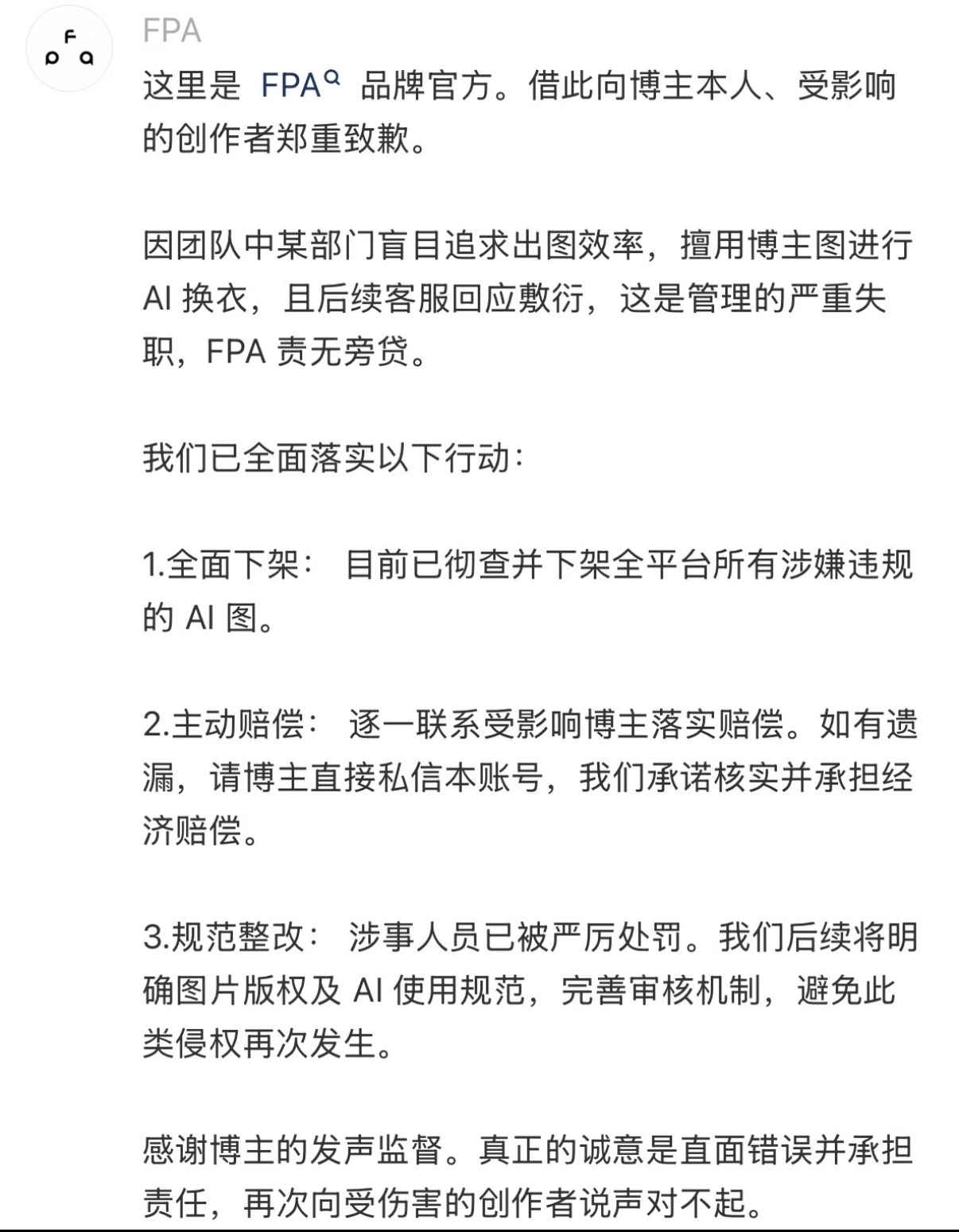
In the apology reproduced by Jiemian, FPA accepted responsibility for a management failure and an inadequate customer-service response. It said it had reviewed and removed suspected infringing AI images across platforms. The brand also said it would contact affected creators about compensation, had disciplined staff involved and would strengthen rules covering image rights, AI use and review. Those are the company’s stated actions and commitments. In a separate inquiry, its customer service told Jiemian that a designated person was following the matter.
There are two distinct questions here, rather like two labels attached to the same picture. One identifies how the image was made; the other establishes whether its materials and subject may be used for that purpose. China’s synthetic-content labeling measures, effective from September 2025, distinguish visible labels from information embedded in files, and require users publishing generated content through platforms to declare it and use labeling functions. A visible label is like a notice on the front of a package. Embedded metadata is more like its production record. Neither is a substitute for permission from the person whose photograph supplied the starting material.
For shoppers, an image of somebody wearing an outfit is therefore different from evidence that the person tried it on or recommended the brand. For retailers, removing a photo shoot from the workflow leaves sourcing, permission and publication review as separate tasks. FPA’s response now includes removal, compensation and internal changes. Delivering those commitments is the practical next step; changing the clothes in the same picture again would leave the underlying dispute unresolved.
Original source published: Jiemian, November 14, 2026, 08:00 Beijing time / November 13, 2026, 7:00 PM EST
Share this article


What do you think of this story?
Anonymous feedback, up to 5 reactions per article.
Anonymous comments
Share your thoughts without signing in.
Discuss the technology and the story. Hate, politics and war, threats, abuse, personal accusations, sexual content, ads, links and personal information are not allowed.
No comments yet. Be the first to share.